


I know what you’re thinking: finally, someone in the entertainment industry is writing on the Internet about artificial intelligence!
But bear with me! Because I think that there is one aspect of AI’s impact on the entertainment business that somehow remains genuinely — and dangerously — underdiscussed.
Most public debate/panic about the potentially existential threat posed to creative industries by generative artificial intelligence focuses on one of two general themes. The first is the replacement problem — the question of what the technology will be capable of in the future, and what those capabilities will mean for the continued ability of human beings to make a living from creative work (and, if they cannot, for the fate of human creativity itself). The second is the AI training problem — that is, how the uncompensated and unauthorized use, at staggering scale, of existing creative works to train AI models is already depriving the creators of those works of fair compensation for their output while, in effect, conscripting these artists and their work as unwitting and unwilling instruments of their own eventual obsolescence.
We’ll come back to those existential questions in my next post.
But right now, I want to direct your attention to how we're already using the technology today is doing quiet damage to the industry of tomorrow. And that starts with acknowledging a different “AI training problem.”
What Do These Ten Tasks Have in Common?
Note-taking in meetings and conference calls;
Script coverage (i.e., creative review and feedback);
Script breakdowns (i.e., identifying and quantifying major production elements such as unique locations, speaking and non-speaking cast, and prop/set decoration requirements);
Coverage of newly published books and articles;
Collecting and summarizing press coverage;
Creating clean demos from “rainbow” negotiation email chains;
Drafting and revising deal memos, certificates, and other simple and form-driven agreements;
Summarizing key terms such as option dates and other deadlines, granted and reserved rights, credit entitlements, and approval rights across groups of agreements;
Reviewing chain-of-title documents and performing basic clearance research; and
Standard administrative correspondence and schedule management?
This seemingly disparate list of common entertainment industry-related tasks, which cut across creative, marketing, business, legal, and general administrative functions, has at least two things in common.
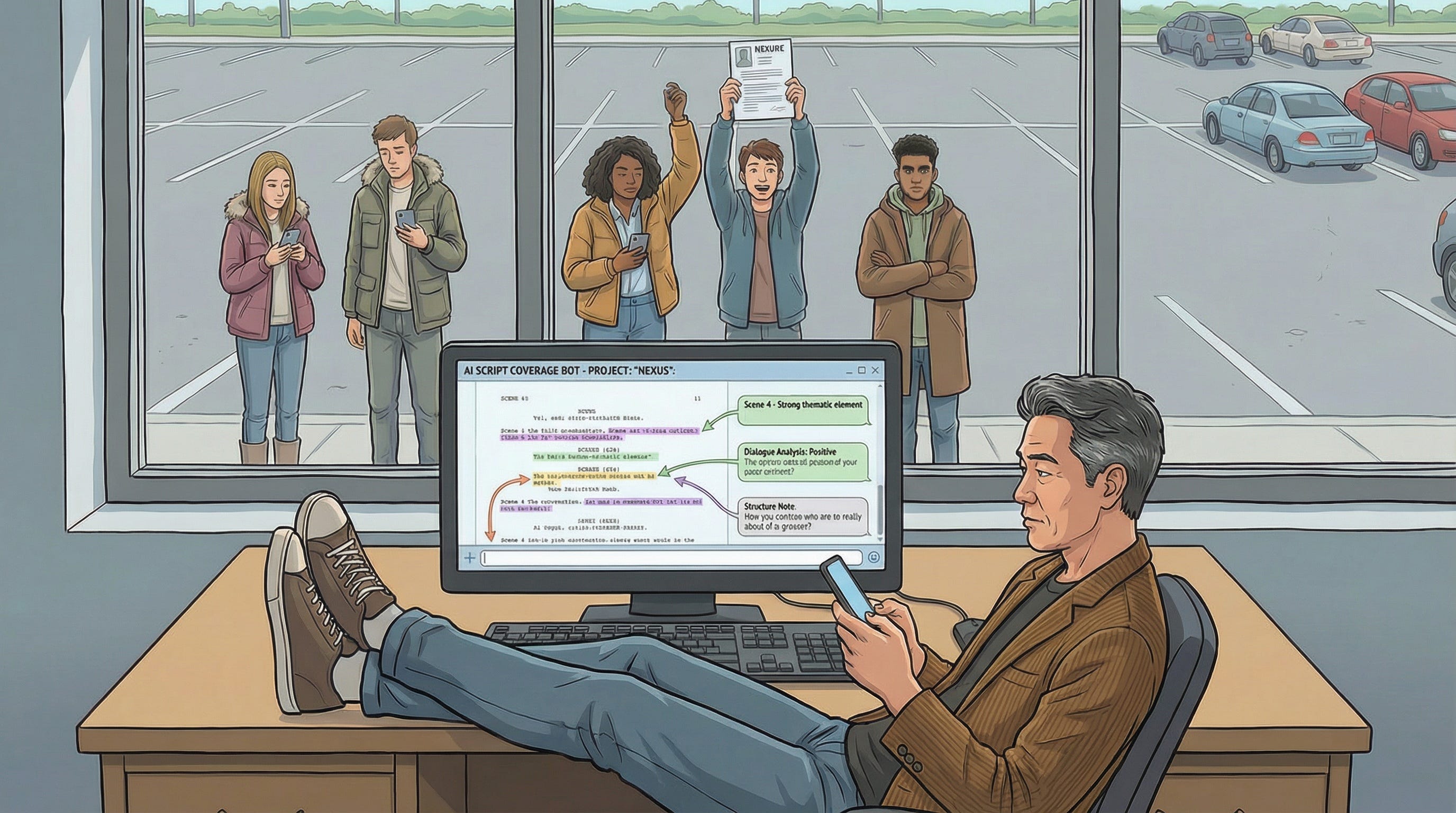
First, they are all tasks that are capably performed by — and, in fact, are already commonly being delegated to — existing large language models and other AI-powered tools.
And second, they are all fairly simple but essential tasks that have traditionally (and efficiently) been delegated to young1 entry-level professionals, who effectively learn how the industry works — and figure out not only how to do their jobs, but also what jobs they want to do in the first place — by closely observing professionals working in a variety of professional capacities and contexts and developing core job skills in meaningful but low-stakes circumstances.
That is the AI training problem we should be talking about more.
The Industry’s Other Generational Crisis
Much has been written about the industry’s building generational crisis. As others have noted, Mike De Luca literally started as an intern at New Line and was running the studio at age 27; now age 60, he co-runs New Line’s parent studio, Warner Bros.2 Bryan Lourd and Kevin Huvane were 34 and 36 years old, respectively, when they and (the slightly older) Richard Lovett took over CAA in October 1995; now aged 65 and 67, they remain firmly in charge.
This was once the norm, not the exception. In 1966, Bob Evans became President of Production at Paramount at the age of 36. In 1974, Barry Diller became the studio’s Chairman and CEO at just 32 years old. In 2026, the Ankler’s Elaine Low launched an ongoing series, examining “how Gen Z, millennials, Gen X and boomers are navigating Hollywood’s narrowing path to power and relevance,” called The Disappearing Ladder.
But, just as there is quietly a second “AI training problem” that the industry has largely ignored, there’s also another looming generational crisis we aren’t paying enough attention to — and in this case, one begets the other.
The rest of this post is for Paid and Premium subscribers. A subscription to The Business of Television Max opens the full site archives, as well as special articles and other professional resources available only to paying subscribers.