



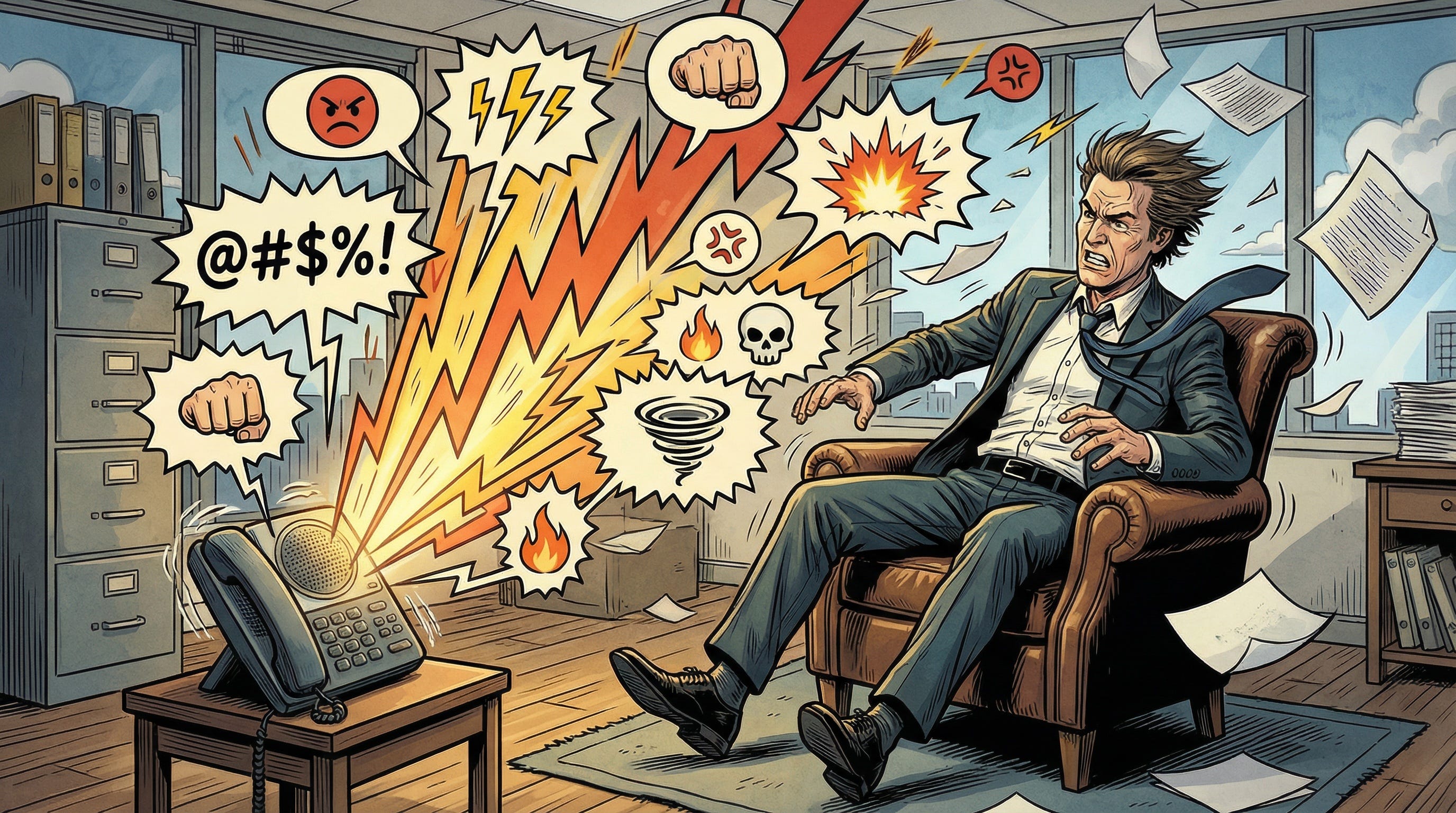
Early in my business affairs career, I had to negotiate a TV development deal for an established creator/showrunner, whose powerful and experienced agent was (and still is) well known around town for two things: his extraordinary client list, and his even more extraordinary temper. Though I had never dealt with him personally before, I knew all that about him before we ever spoke.
I, on the other hand…well, I wasn’t known for anything at all. Although I had spent five years at a law firm (mainly working on deals for feature film talent), I still had minimal experience in TV dealmaking, very few solid relationships with talent representatives, and no public reputation to speak of. So that’s what he knew about me before our first call: nothing. Which, I’m sure, told him all he felt he needed to know about who he was dealing with: some rookie. (Which, to be clear, I very much was.)
Our first call was uneventful. The second started cordially enough. But the agent soon grew frustrated with my main argument (based on the terms of a prior related deal) for why I wasn’t meeting his demands. When he could tell I was going back to that well yet again — maybe one too many times for one call — he cut me off mid-sentence, and suddenly roared at me in a voice that I can only describe as full-on screaming yet every sentence seems to end in just a period instead of an exclamation mark, warning, “If you reference that old deal one more time, I will burn your career to the ground. I will call every boss you have ever had, and every boss you could ever have, and tell them all how awful you are, and that will resonate. So shut the fuck up.”
That was the first time a talent representative yelled at, cursed at, or threatened me; it definitely wasn’t the last. After that first verbal beat-down, I sat for a moment in stunned silence, unsure of what to say next. But in the years since, I’ve figured out exactly what I want to say to anyone who tries to bully me like that (though I actually never have):
Surely you must know this doesn’t actually work well…right?
You Shouldn’t Avoid Bullying (Just) Because It’s Mean; You Should Avoid It Because It’s Bad for Business
There are all kinds of reasons why I don’t believe in trying to bully your way through negotiation, from the ethical (all that “Golden Rule” and “categorical imperative” stuff), to the humanist (being mean sucks), to the reputational (maybe you don’t mind being hated by much of your own professional community, but I sure would), to the communitarian (wouldn’t all of our jobs be a lot better if everyone in the business just stopped acting like this?), to the familial (can you really turn that off when you go home and interact with your spouse and kids?), to the physiological (that can’t be good for your heart).
I get that this is largely a temperament and values thing — some people can just talk to other human beings that way, and some cannot. If the reasons above aren’t already persuasive to you, I doubt I could say anything here to change your mind. But I have a far more practical (and universal) reason to strongly discourage that kind of behavior: it seldom helps, and it often backfires.
Why Bullying Can Seem Effective (But Actually Isn’t)
If you asked people with a hyper-aggressive negotiation style why they do what they do, a select few might admit that they enjoy it. But most would simply say: “I do it because I am a zealous advocate for my clients, and because it works.” I disagree only with the second part.
A verbally abusive negotiating style can work in certain situations — mainly when dealing with young and inexperienced negotiators whose lack of knowledge (or confidence therein) makes them vulnerable to being steamrolled. More capable negotiators who could resist may also sometimes give into the pressure toward the end of a negotiation, just to make an unpleasant deal finally go away.1 And, particularly in times of widespread job insecurity, standing up to a very powerful and very pissed off-sounding agent can sometimes feel hazardous to one’s career.2
But most everyone also recognizes that (1) knowledgeable and experienced executives are considerably harder to push around, and (2) if someone has done this job long enough, things that would have thrown them into fight-or-flight mode at the beginning of their career will now elicit little more from them than eye-rolls. Some sharp-tongued negotiators are therefore very thoughtful and tactical about who they bargain with using fire and brimstone, and who they approach with milk and honey. For most negotiators, myself included, run-ins like the one I described above naturally grow increasingly rare over time.
Nevertheless, some very seasoned negotiators will try to bull their way through virtually every deal, regardless of who they’re dealing with on the other side (or how sought-after their client actually is). Can they really be so wrong about what has worked for them over many years (or even decades) of successful, hard-nosed dealmaking?
The rest of this post is for Paid and Premium subscribers. A subscription to The Business of Television Max opens the full site archives, as well as special articles and other professional resources available only to paying subscribers.