



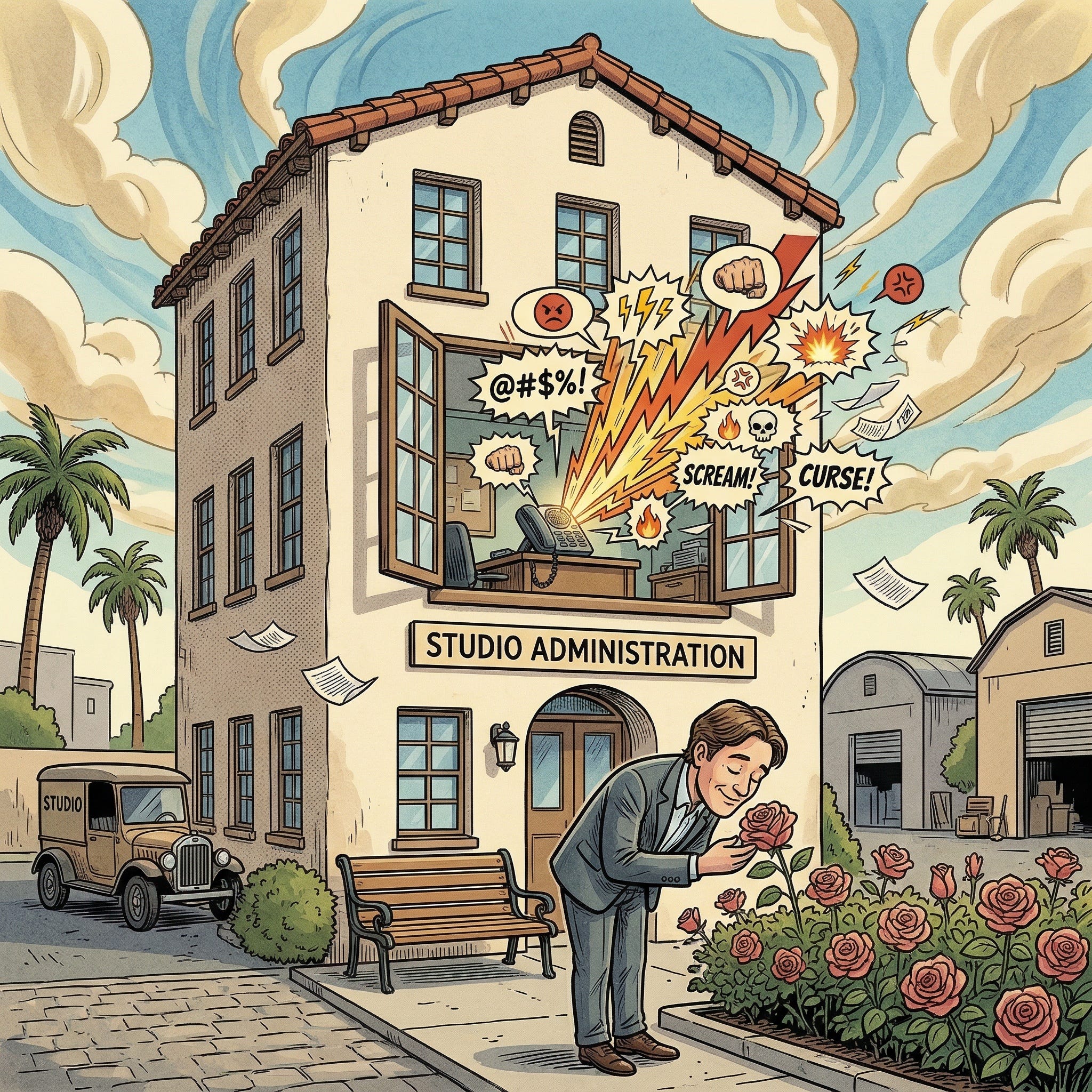
I opened Monday’s post with the story of the first time a talent representative yelled at, cursed at, or threatened me during a negotiation — in fact, it was all three at once! I went on to make my case for why bullying negotiation tactics are not just ineffective, but can often lead to worse outcomes for those who rely on them. But I never described how I actually responded to that first menacing monologue of my career, which culminated with the lines, “I will burn your career to the ground. I will call every boss you have ever had, and every boss you could ever have, and tell them all how awful you are, and that will resonate. So shut the fuck up.”
Today, I’m back to finish my story, and to share four other techniques for countering or defusing hyper-aggressive negotiators. Remember, now and always: not every tactic is equally appropriate for every situation (because context matters), nor is every tactic right for every negotiator (because personal style and authenticity matter too).1 But in this case, all five approaches I describe have two key characteristics in common:
First, they (almost) never involve escalating, mirroring the other side’s aggressiveness or hostility, or even so much as raising your voice. Conflict is a hyper-aggressive negotiator’s comfort zone — they thrive on it. If they can’t immediately intimidate you into compliance, getting you riled up is the next best thing. Why try to fight them on their own terms?
And second, each of these tactics is essentially grounded in the same core principle as judo: ju yoku go o seisu. The phrase literally translates to “softness controls strength,” but the interpretation you’ve probably heard most is “using your opponent’s momentum against them.”
The Dropped Call
The first option is, if not the most common, at least the most commonly daydreamed about by negotiators while actively enduring verbal abuse: just hang up.
As anyone who has been hung up on in a personal conversation can attest, it’s a very disruptive and disorienting experience, as well as a clear and intentional breach of social norms. And that’s exactly why it can sometimes help counter and defuse an abusive negotiator (especially one who is prone to long rants), jolting the screamer out of their flow/fugue state with the wordless yet unmistakeable message: I will not tolerate your complete lack of courtesy, decency, and professionalism any longer; and if you don’t change your behavior, you can no longer expect any of that from me in return.
That said, I’m not a big fan of this tactic. That’s not to say I haven’t tried it (I have); or that it isn’t incredibly personally gratifying in the moment (it is); and certainly, this list would not be complete without it. But I have a strong bias against escalation in any heated situation, and hanging up is a blunt instrument that almost always demands some delicate follow-up to make sure it doesn’t backfire. I’m also wary of any tactic that (1) unless deployed extremely carefully and selectively, can easily come at a cost to one’s moral authority;2 and (2) even if deployed extremely carefully and selectively, can easily come at a cost to one’s long-term relationship with the hung up upon. And, most importantly, I try to stay vigilant about prioritizing what works over what sounds or feels good to me, and I think that the decision to hang up on someone is usually more about the “incredibly personally gratifying in the moment” thing than anything else.
You can think of hanging up as the “control-alt-delete” of negotiation — a “hard reset” that can be used to interrupt a program that has gone rogue, become insensate to new commands, and begun aggressively sucking up all of the computer’s processing power (rendering further productive action all but impossible). As the system reboots, the rogue program’s hold on the computer’s processing power is broken, and normal operations can resume. It’s easy, it works, and everybody does it from time to time.
But any computer expert will also tell you that, as useful as “control-alt-delete” can be, it should be used sparingly (and ideally as a last resort). That’s because it can cause hard-to-detect damage to a computer’s operating system which, while usually minor and perhaps unnoticeable in the moment, can build up and degrade the whole system’s performance over time. By the same token, over- or mis-using “hanging up” can do subtle but lasting harm that can impair one’s effectiveness in the long run (at least with those on the receiving end).
But you’re probably going to try it sometime (if you haven’t already), so I’ll at least offer a few pointers that will help it go better (maybe):
Give the other person fair warning that you will hang up if they persist (or, if you’re going to spring it on them unannounced, at least make sure that’s a deliberate choice rather than a reactive one3).
Be prepared to answer calmly, truthfully, and respectfully if they call back and say, sincerely or otherwise, “I think the call must have dropped there” (especially if you did not give them any prior warning).
Be prepared to answer calmly, truthfully, and respectfully if they call back and start screaming, even more aggressively than before, “How dare you? That’s the most unprofessional thing I’ve ever seen.” (Or be prepared to do what one friend and fellow BA executive did in this situation: promptly hang up again.)
If it works, never hang up on that same person ever again. And if it doesn’t work, never hang up on that same person ever again.
Try to get this out of your system early in your career.
Stupid and Cheerful
As I discussed on Monday, aggressive negotiators often expect and/or want to be met in kind — shouting matches are their home turf. So if someone is being persistently snide, rude, condescending, or similarly low-key hostile, there is a good chance they are trying to get a rise out of you (which would give them the green light to really go off on you after that).
That is why it can be so confounding to them if you instead respond, with a cheerful lilt in your voice, as though you never even noticed the provocation — just stick to the subject at hand and take on a breezy tone as though this call has been just another part of your absolutely lovely day. When it really works, it’s like a boxer dodging a rainmaker so gracefully that the attacker falls off balance and trips over his own feet.
The rest of this post is for Paid and Premium subscribers. A subscription to The Business of Television Max opens the full site archives, as well as special articles and other professional resources available only to paying subscribers.