
All-in-one. End-to-end. Loyal only to you and your franchise.
Successfully translating a beloved video game into a great film or TV series is a real challenge all by itself. Making it a creative, financial, and strategic triumph for the creators and owners of these rich imaginary worlds is a daunting task that no one should have to figure out on their own.
With video game adaptations for film and TV in higher demand than ever, publishers and developers encounter an array of specialized entertainment professionals who want to work with them, sell them something, or buy something from them (but may or may not ever actually follow up). Producers, executives, lawyers, agents, managers — it isn’t always clear exactly what it is each of these people does (though you might wonder if it’s very much), or to whom (or to what) they’re ultimately loyal or accountable (but you’re pretty sure it isn’t to you or your franchise).
After a career spent working in high-level executive positions across Paramount Television Studios, Sony Pictures Television, and Amazon Studios, I went to Riot Games, where I helped launch the company’s in-house film and television studio (and, along the way, won an Emmy as an executive producer of the second season of Arcane). I’ve seen every side of the traditional entertainment/video game industry divide many times. Along the way, I’ve learned as much as anybody about all the ways that passionate and well-intentioned efforts to adapt beloved games can go wrong — and about what it takes to make sure they go right.
With 1Up Productions, you get a bona fide expert in both industries, who can help you take on the film and TV business with your creative, business, and strategic goals (and your anxieties) in mind. You get a Hollywood insider who knows how to build a worthy and winning team around you and your project. But most of all, you get someone who can guide, teach, and represent you — however much and in whatever ways you want to be guided, taught, and represented — through every stage of the adaptation process, from inception through release. And if you want, it can start with your very first big decision: whether to pursue an adaptation at all.


The 1Up deck
Everything on this page, as I present it, in 12 slides.
Or page through the slides at the bottom of this page ↓


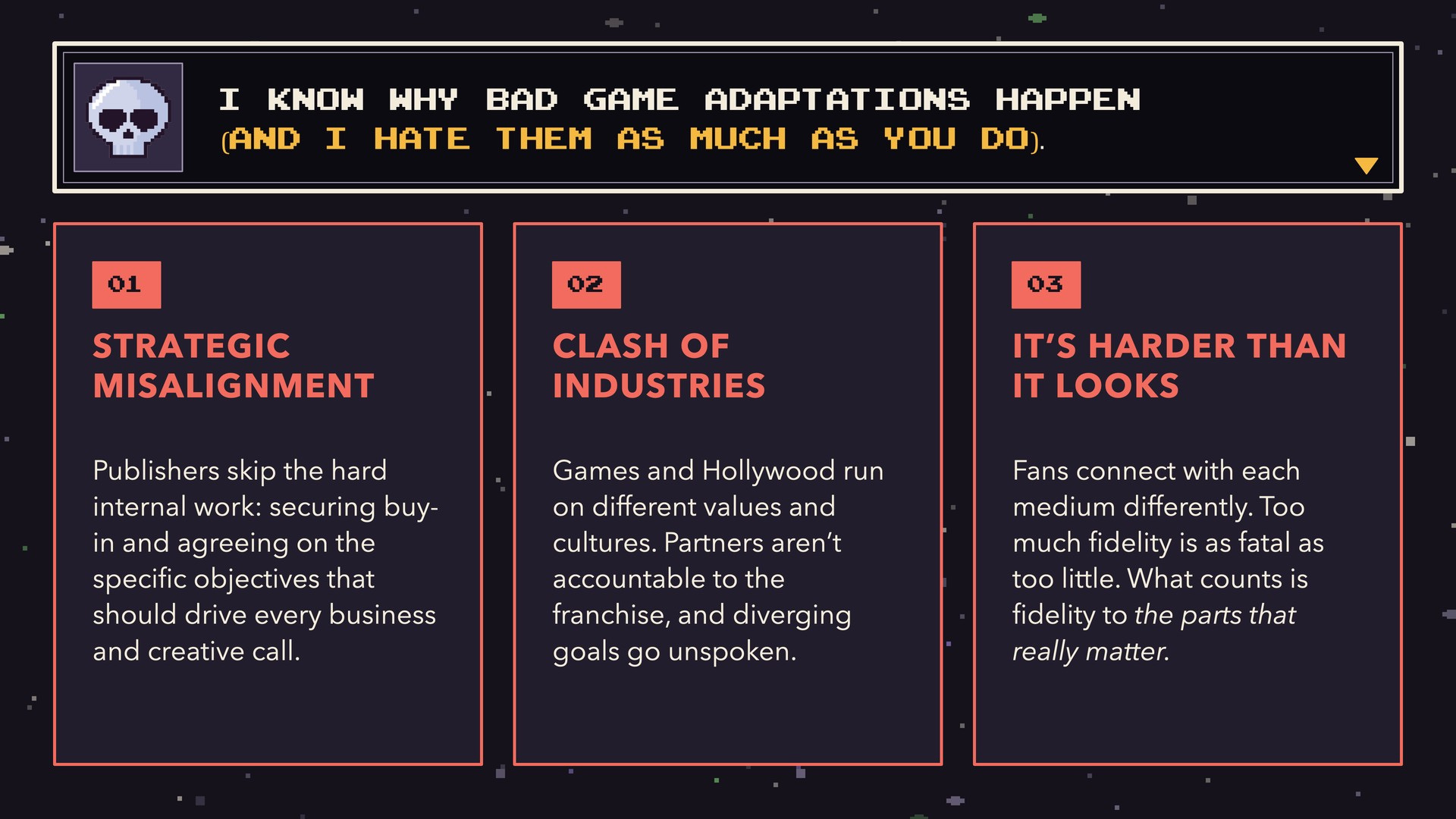
01. Strategic misalignment. Publishers skip the hard internal work: securing buy-in and agreeing on the specific objectives that should drive every business and creative call.
02. Clash of industries. Games and Hollywood run on different values and cultures. Partners aren’t accountable to the franchise, and diverging goals go unspoken.
03. It’s harder than it looks. Fans connect with each medium differently. Too much fidelity is as fatal as too little. What counts is fidelity to the parts that really matter.


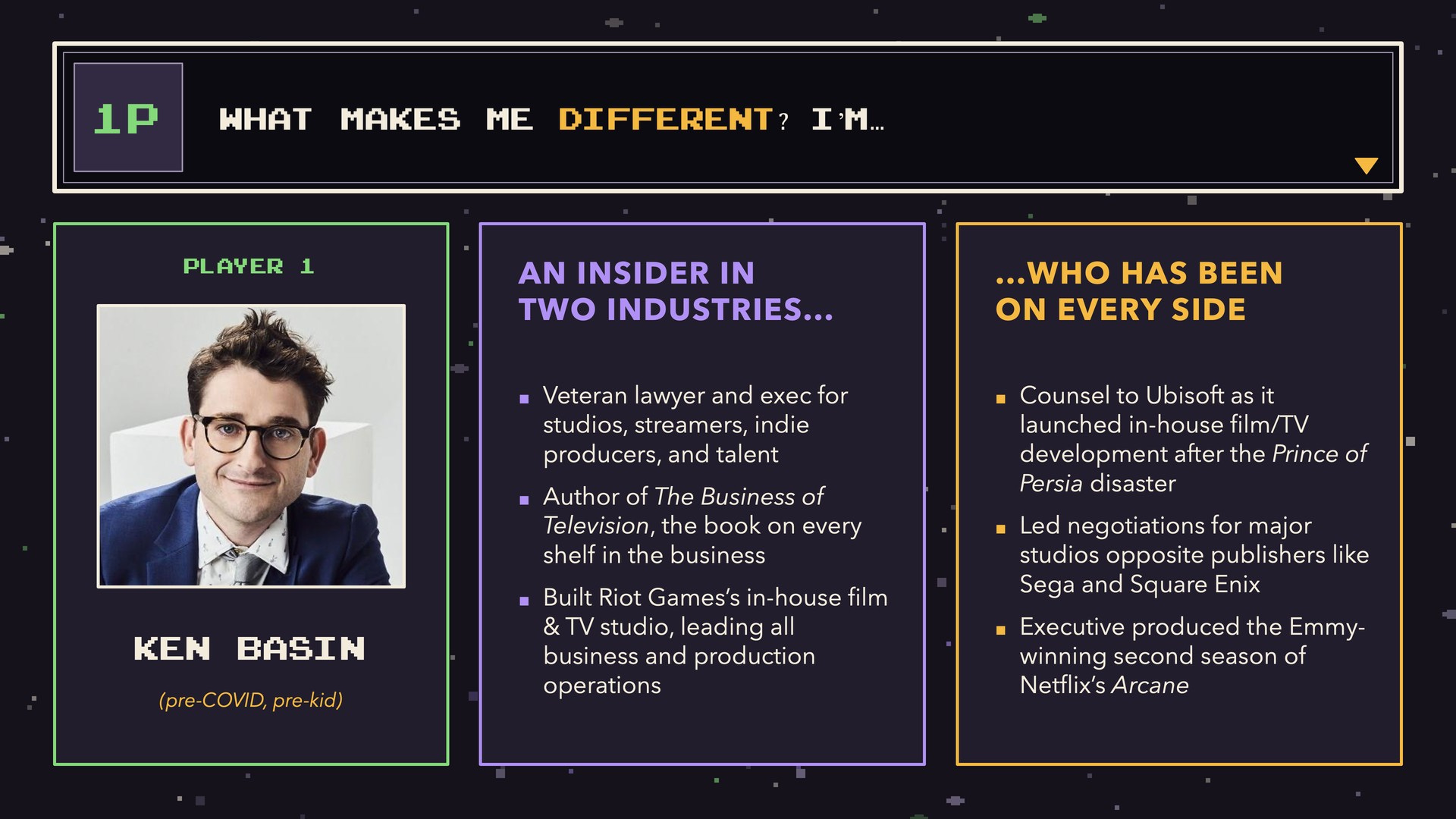
An insider in two industries…
Veteran lawyer and exec for studios, streamers, indie producers, and talent
Author of The Business of Television, the book on every shelf in the business
Built Riot Games’s in-house film & TV studio, leading all business and production operations
…who has been on every side
Counsel to Ubisoft as it launched in-house film/TV development after the Prince of Persia disaster
Led negotiations for major studios opposite publishers like Sega and Square Enix
Executive produced the Emmy-winning second season of Netflix’s Arcane


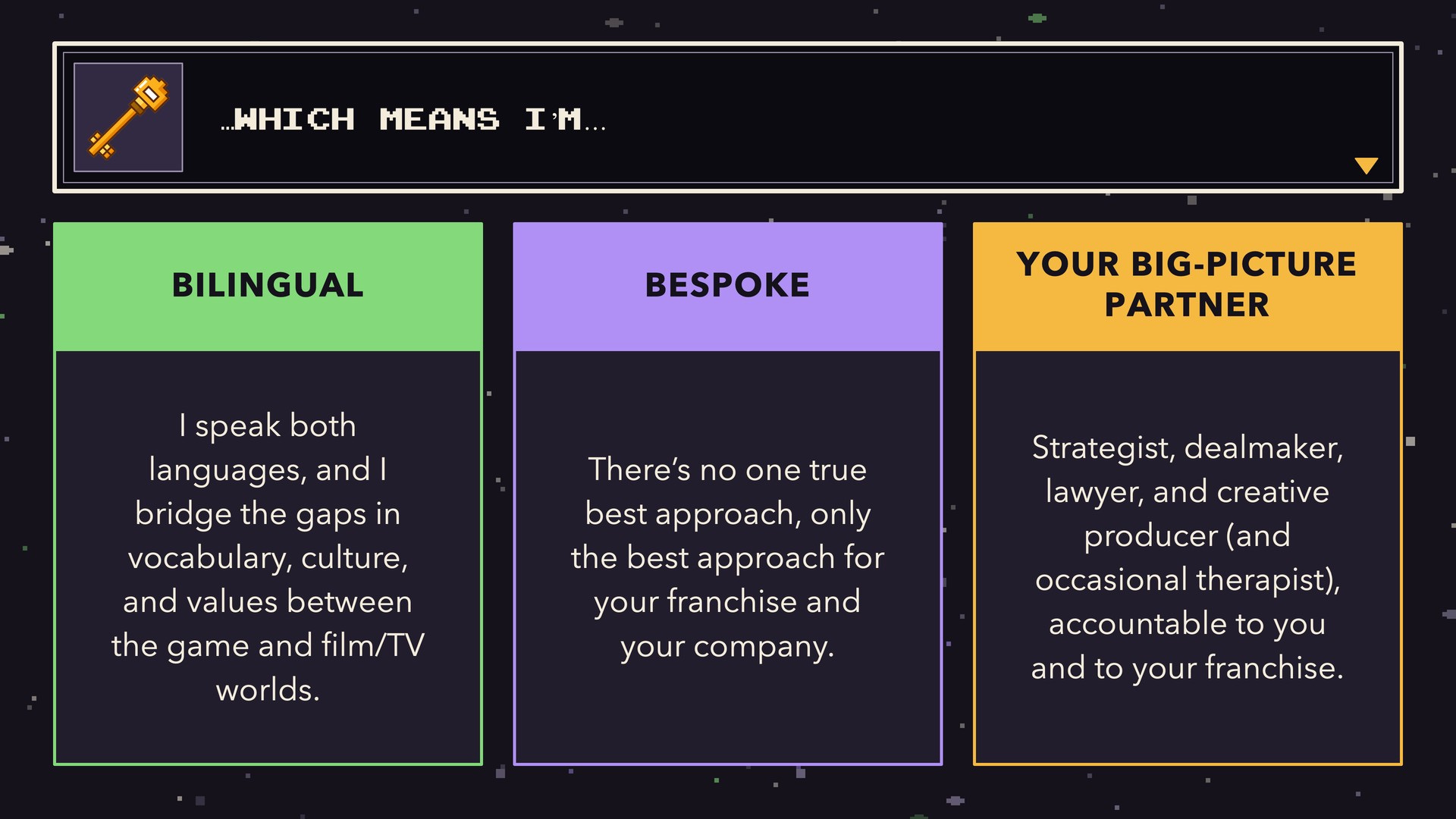
Bilingual. I speak both languages, and I bridge the gaps in vocabulary, culture, and values between the game and film/TV worlds.
Bespoke. There’s no one true best approach, only the best approach for your franchise and your company.
Your big-picture partner. Strategist, dealmaker, lawyer, and creative producer (and occasional therapist), accountable to you and to your franchise.


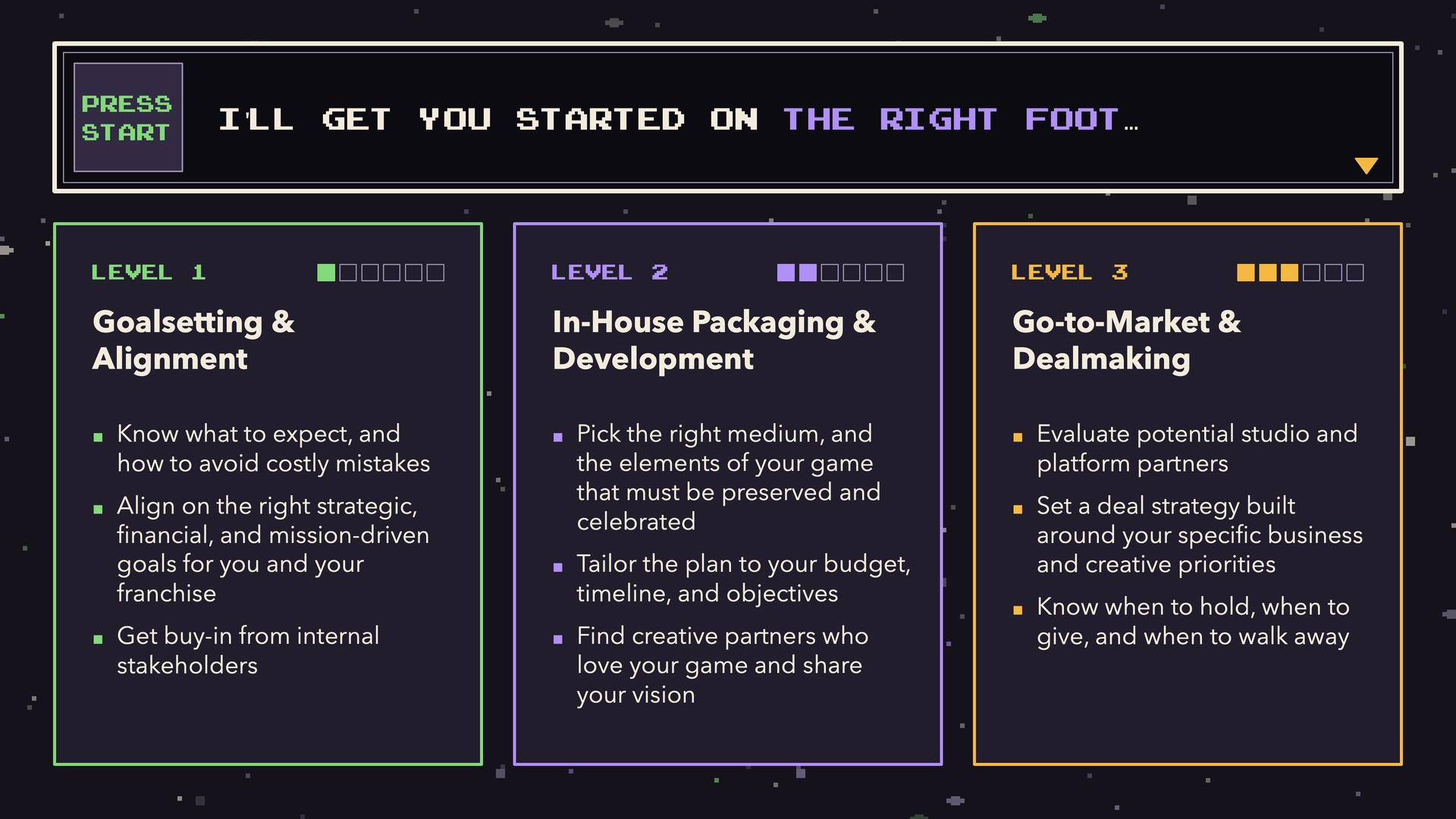
Level 1: Goalsetting & Alignment
Know what to expect, and how to avoid costly mistakes
Align on the right strategic, financial, and mission-driven goals for you and your franchise
Get buy-in from internal stakeholders
Level 2: In-House Packaging & Development
Pick the right medium, and the elements of your game that must be preserved and celebrated
Tailor the plan to your budget, timeline, and objectives
Find creative partners who love your game and share your vision
Level 3: Go-to-Market & Dealmaking
Evaluate potential studio and platform partners
Set a deal strategy built around your specific business and creative priorities
Know when to hold, when to give, and when to walk away


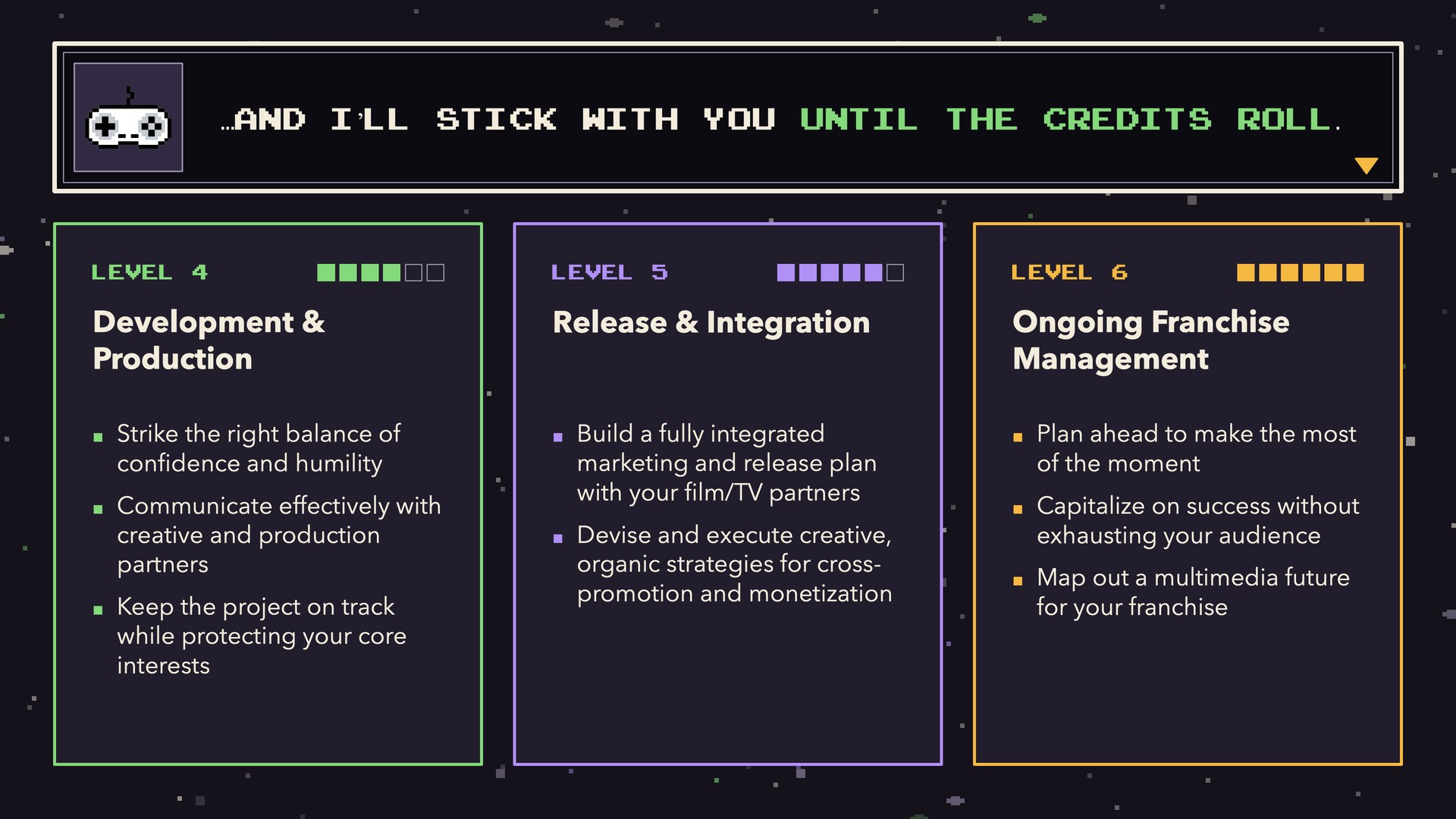
Level 4: Development & Production
Strike the right balance of confidence and humility
Communicate effectively with creative and production partners
Keep the project on track while protecting your core interests
Level 5: Release & Integration
Build a fully integrated marketing and release plan with your film/TV partners
Devise and execute creative, organic strategies for cross-promotion and monetization
Plan ahead to make the most of the moment
Level 6: Ongoing Franchise Management
Capitalize on success without exhausting your audience
Map out a multimedia future for your franchise


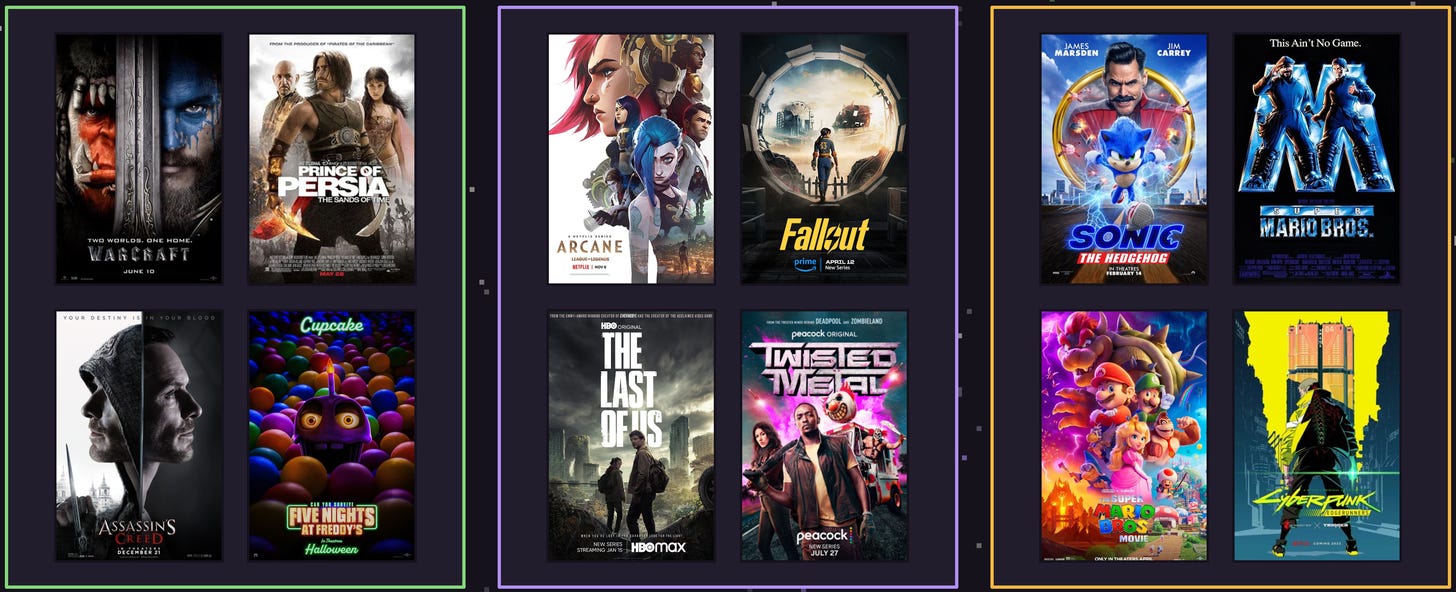
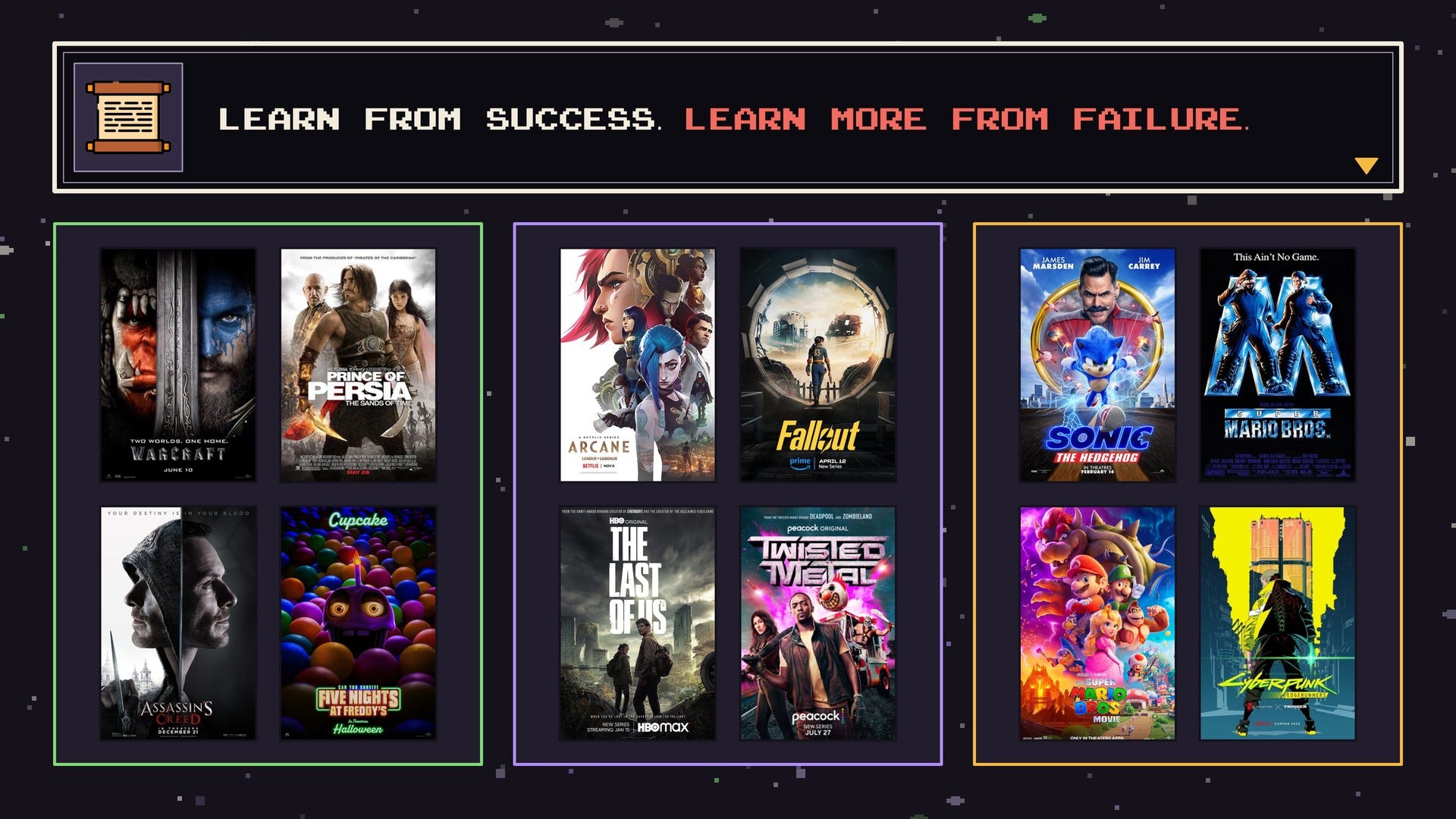
Warcraft, Prince of Persia: The Sands of Time, Assassin’s Creed, Five Nights at Freddy’s, Arcane, Fallout, The Last of Us, Twisted Metal, Sonic the Hedgehog, Super Mario Bros. (1993), The Super Mario Bros. Movie (2023), and Cyberpunk: Edgerunners.


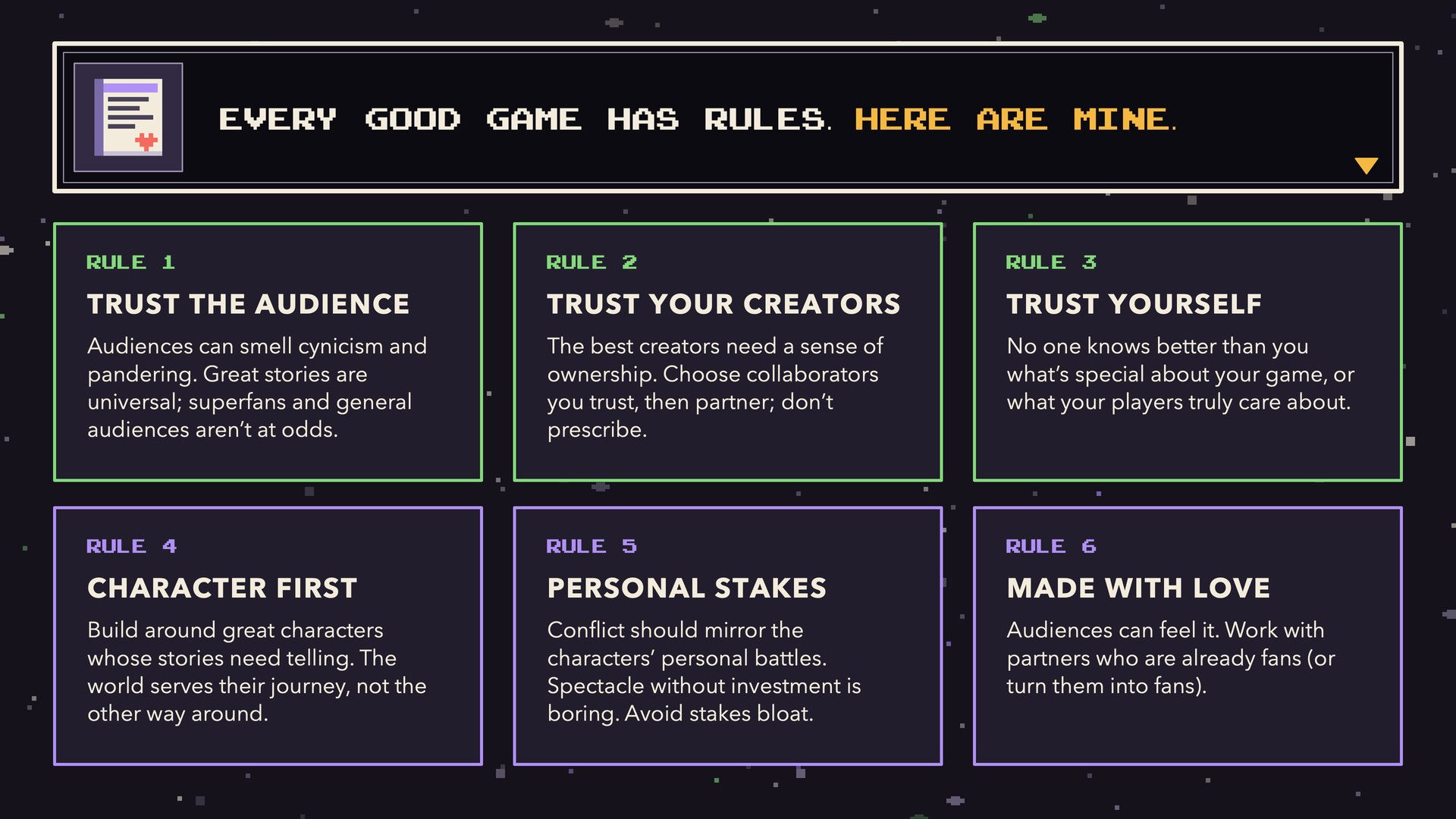
Trust the audience. Audiences can smell cynicism and pandering. Great stories are universal; superfans and general audiences aren’t at odds.
Trust your creators. The best creators need a sense of ownership. Choose collaborators you trust, then partner; don’t prescribe.
Trust yourself. No one knows better than you what’s special about your game, or what your players truly care about.
Character first. Build around great characters whose stories need telling. The world serves their journey, not the other way around.
Personal stakes. Conflict should mirror the characters’ personal battles. Spectacle without investment is boring. Avoid stakes bloat.
Made with love. Audiences can feel it. Work with partners who are already fans (or turn them into fans).

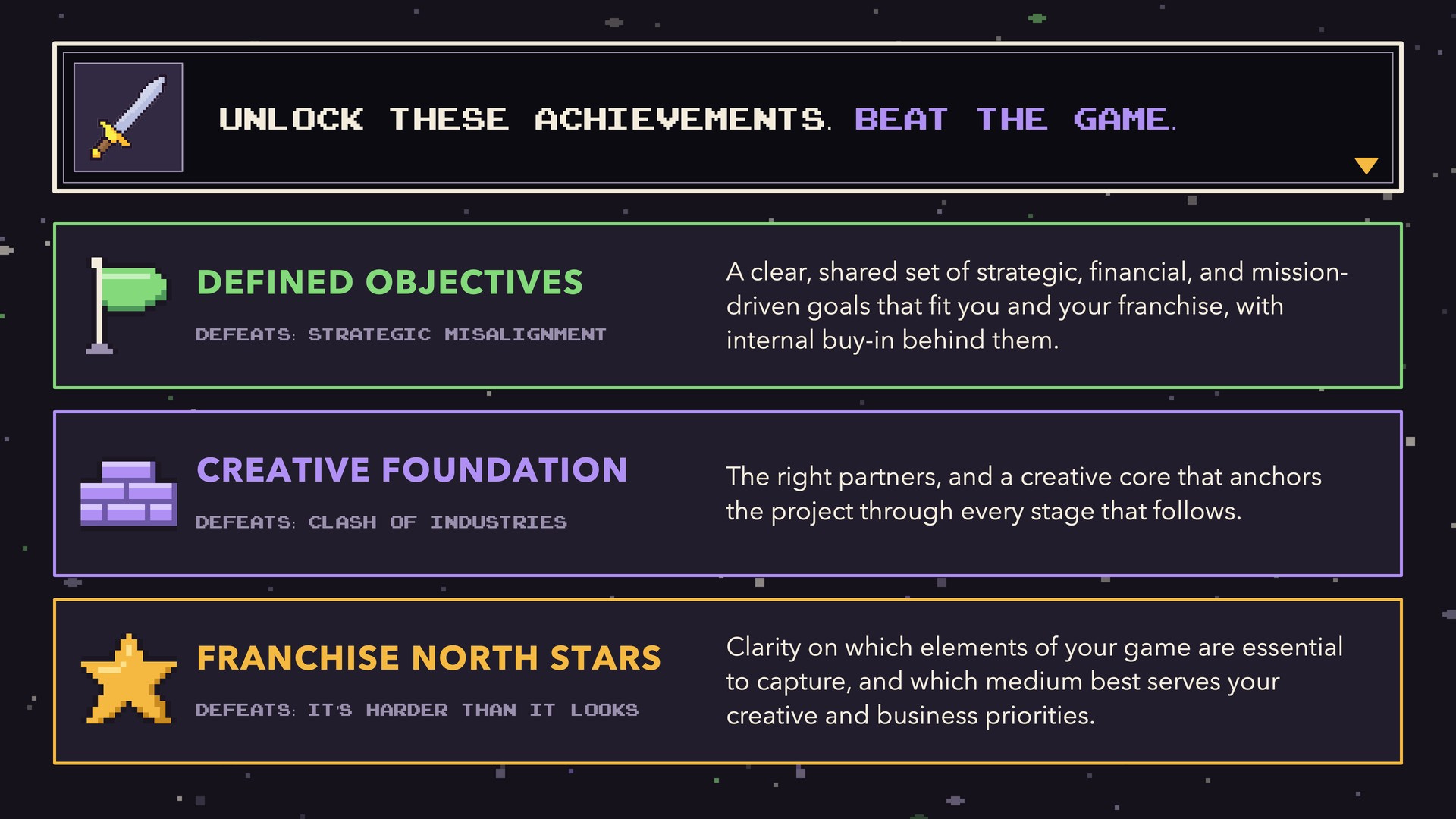
Defined objectives (defeats: strategic misalignment). A clear, shared set of strategic, financial, and mission-driven goals that fit you and your franchise, with internal buy-in behind them.
Creative foundation (defeats: clash of industries). The right partners, and a creative core that anchors the project through every stage that follows.
Franchise north stars (defeats: it’s harder than it looks). Clarity on which elements of your game are essential to capture, and which medium best serves your creative and business priorities.


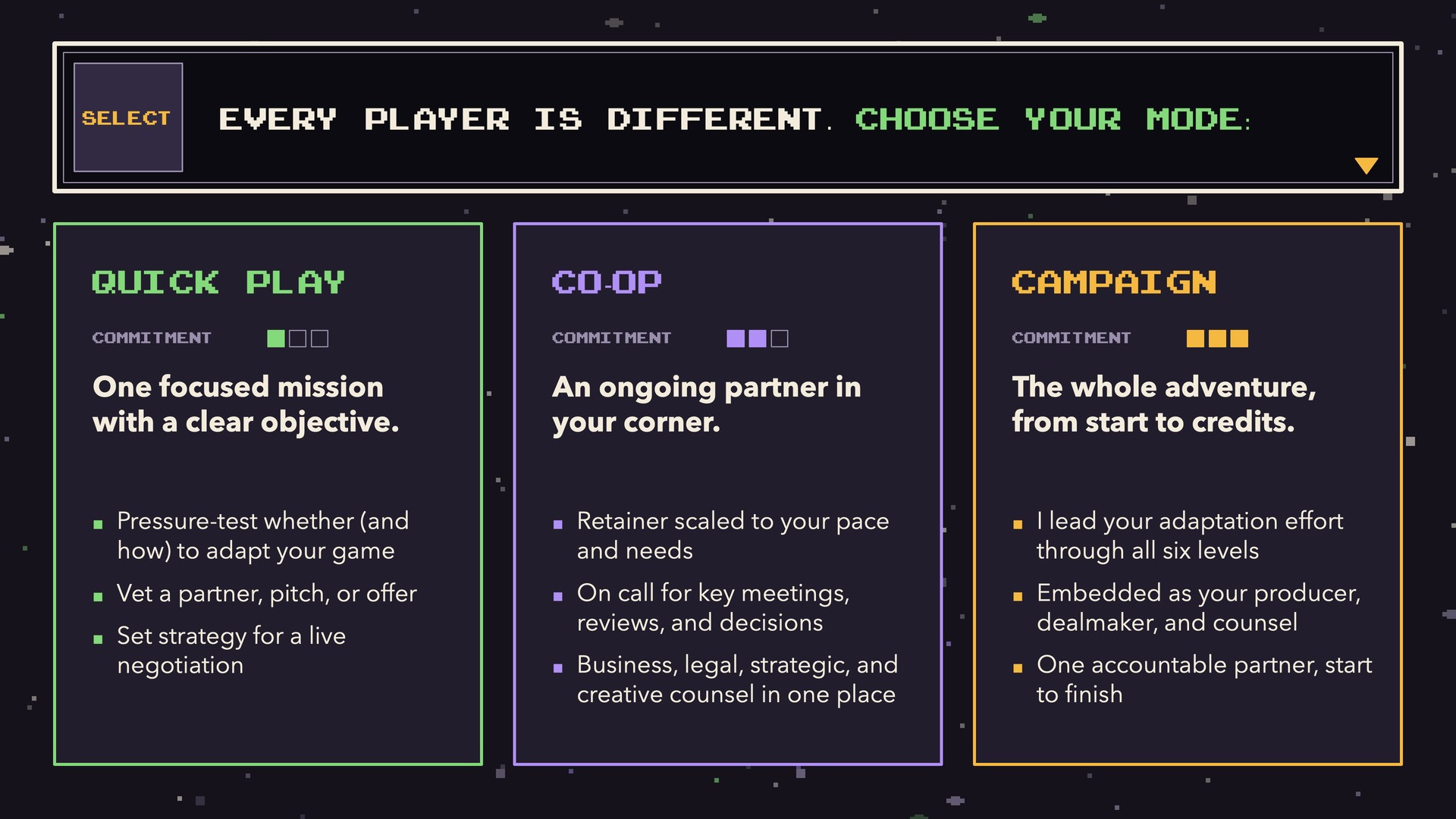
Quick Play: one focused mission with a clear objective.
Pressure-test whether (and how) to adapt your game
Vet a partner, pitch, or offer
Set strategy for a live negotiation
Co-op: an ongoing partner in your corner.
Retainer scaled to your pace and needs
On call for key meetings, reviews, and decisions
Business, legal, strategic, and creative counsel in one place
Campaign: the whole adventure, from start to credits.
I lead your adaptation effort through all six levels
Embedded as your producer, dealmaker, and counsel
One accountable partner, start to finish


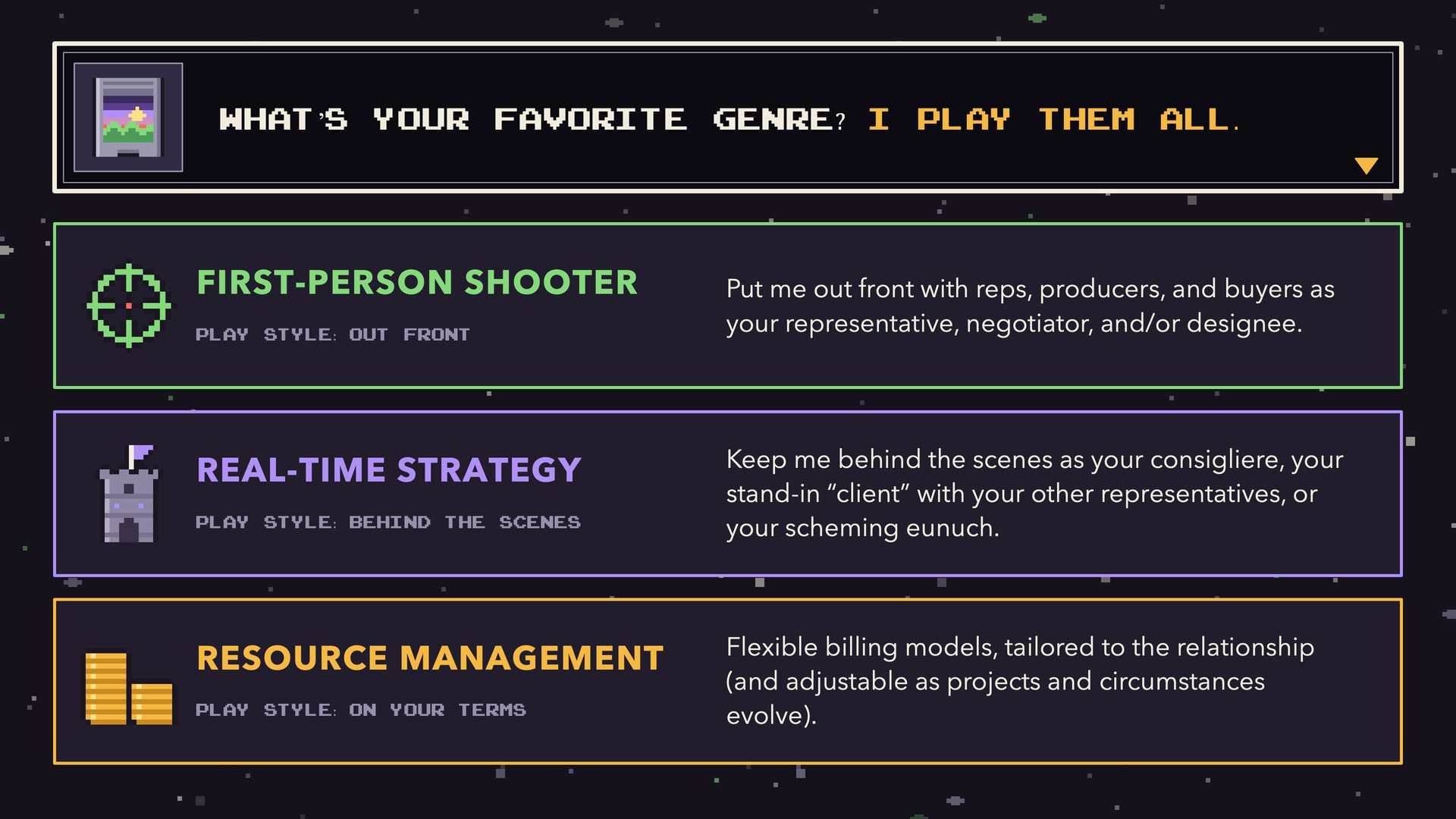
First-person shooter (play style: out front). Put me out front with reps, producers, and buyers as your representative, negotiator, and/or designee.
Real-time strategy (play style: behind the scenes). Keep me behind the scenes as your consigliere, your stand-in “client” with your other representatives, or your scheming eunuch.
Resource management (play style: on your terms). Flexible billing models, tailored to the relationship (and adjustable as projects and circumstances evolve).

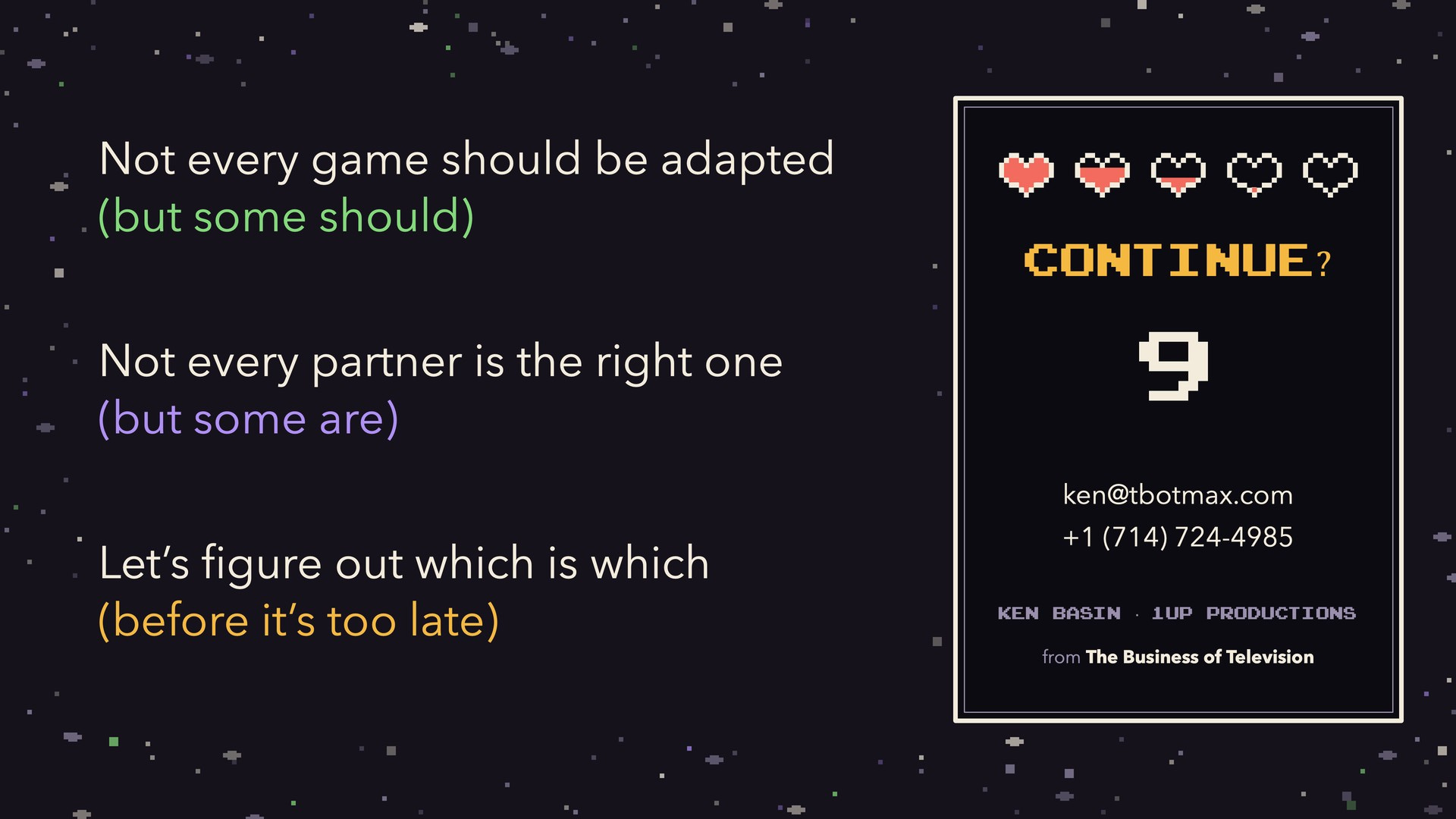
Continue?
Not every game should be adapted (but some should).
Not every partner is the right one (but some are).
Let’s figure out which is which (before it’s too late).

The Deck
Every slide, in order. Expand to see all 12, or download the PDF.